
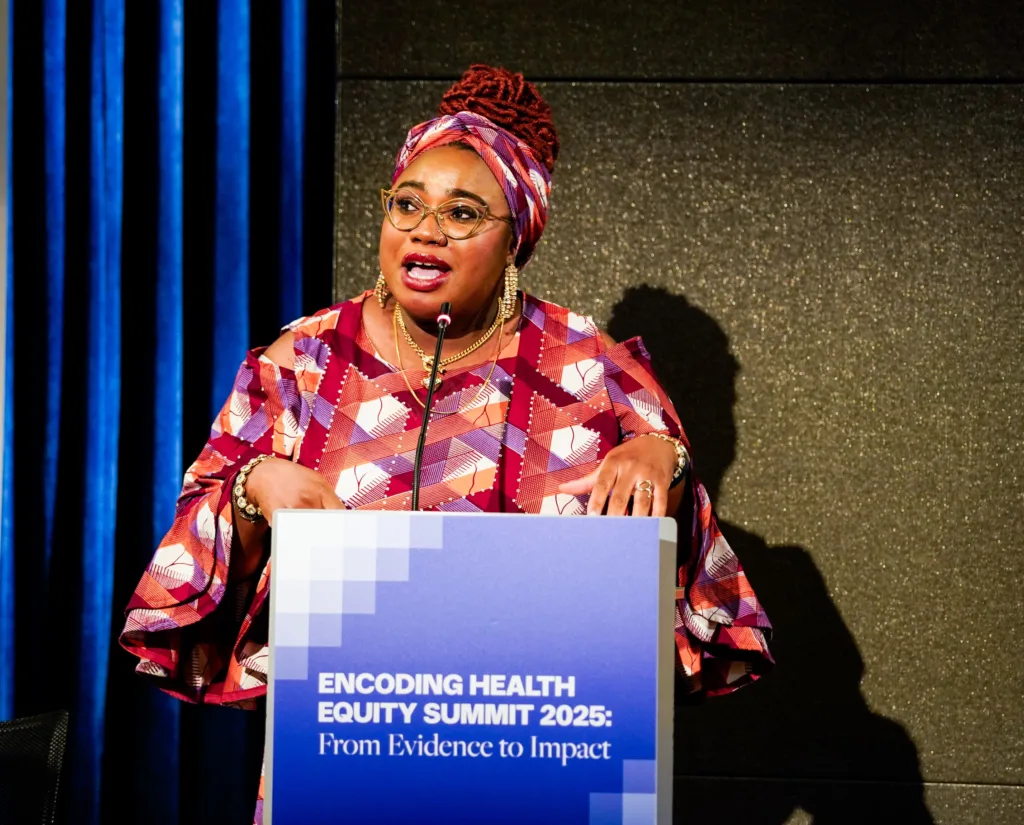
D-ERBMT: When Righteous Anger Meets Strategic Organizing
The Approach
The Detroit End Race-Based Medicine Taskforce’s (D-ERBMT) foundation rests on a fundamental principle: those closest to the problem are closest to the solution. Unlike coalitions that engage communities as afterthoughts, D-ERBMT positioned community members who lost family to COVID as central leaders and decision-makers.
The taskforce developed innovative tools to activate community leadership:
- The 3 Ls Framework: Learn (about race-based medicine), Lend (your voice through stories), Lead (change in your sphere of influence)
- RACE Tool: A comprehensive pamphlet explaining race-based medicine in plain language with specific action steps
- Storyboard Project: Collecting narratives from patients, providers, and community members about experiences with race-based medicine
Importantly, D-ERBMT enabled community members to teach healthcare professionals about their lived experiences of learning to navigate and challenge medical systems.
Implementation in Action
The taskforce’s approach spans four strategic domains: advocacy, research, education, and coalition building. Each domain reinforces the others, creating sustainable infrastructure for change.
Regular community town halls became spaces for both education and accountability. After events, D-ERBMT evaluates impact and reports back to participants, maintaining trust through transparency. Partnerships with organizations like the American Kidney Fund provide health equity training that positions community members as experts rather than as recipients of charity.
Outcomes and Lessons
D-ERBMT has had impact in multiple areas. For example, individual clinicians report immediate practice changes – like the physician who prevented an antibiotic overdose by challenging race-based dosing. Community leaders have transformed from participants to powerful advocates, with one community leader declaring at public events: “This has got to end now. People are dying and suffering needlessly and preventably.”
The taskforce’s influence extends through partnering with Wayne State University School of Medicine on curriculum changes, partnerships with the Michigan State Medical Society and Department of Health and Human Services, and influencing policy change. Their multimedia approach, including newsletters, newspapers, podcasts, and radio, ensures that messages reach diverse community audiences.
Key Insights
- Start with righteous anger: Authentic outrage at injustice provides sustainable fuel for long-term organizing
- Center those most affected: Community leadership is essential and fundamental to building effective solutions
- Create accessible tools: Plain language materials and clear frameworks enable broad participation
- Build multimedia presence: Diverse communication channels reach different segments of the community
- Maintain accountability loops: Regular evaluation and reporting back to community partners maintains trust and engagement
D-ERBMT proves that when the communities most affected by racial health inequities lead the charge for change, the resulting transformation addresses not just clinical algorithms but the fundamental relationship between healthcare systems and the people they serve.
Call to Action for Specialty Societies
Medical societies can follow D-ERBMT’s model by positioning patients and community members as central leaders in developing clinical guidelines, not just as stakeholders consulted after decisions are made. They can create plain-language tools and education programs that enable community members to actively participate in and lead the transformation away from race-based medicine.