

The Problem
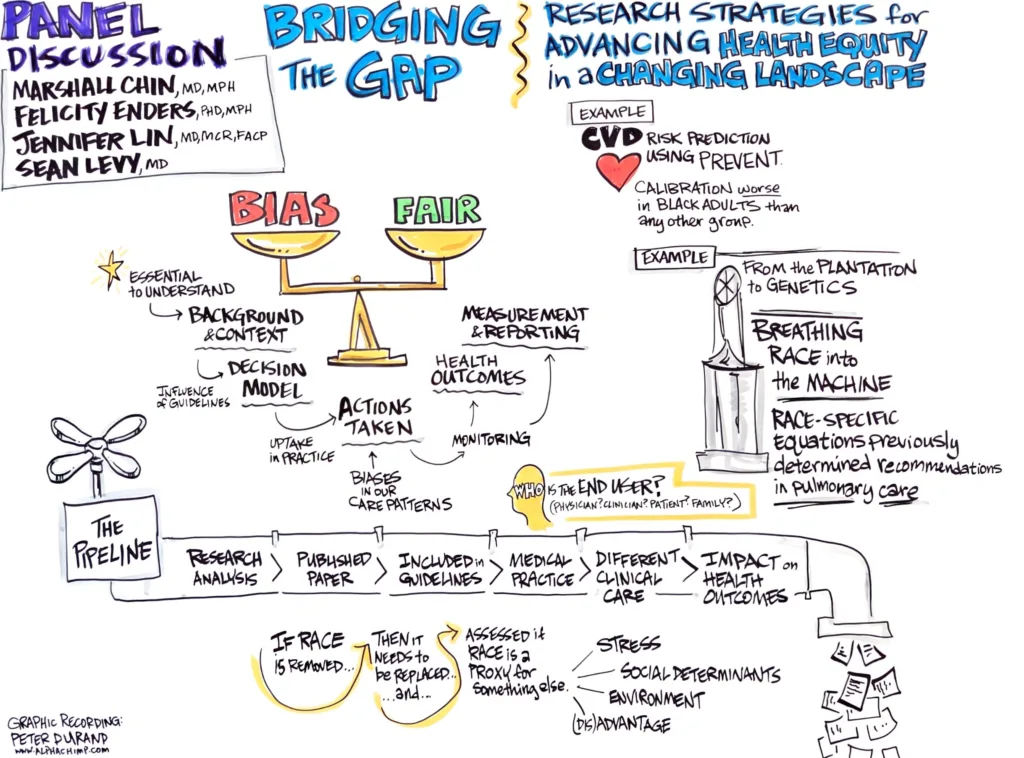
Researchers are trained to include race and ethnicity as predictor variables in research models. When race and ethnicity are statistically significant, researchers frequently retain it in the model —even though race and ethnicity are not biological factors, but merely markers that can point to underlying distinctions, such as environmental exposure or genetic inheritance. In reality, differences attributed to race and ethnicity can be explained by factors like these or others, including structural or social determinants of health. As these findings move through the institutional publication pipeline from research to publication to professional society guidelines and, eventually, to clinical practice, the inclusion of race and ethnicity can reinforce inequities in care.
The Approach
Felicity T. Enders, PhD, MPH, Associate Director of the Center for Clinical and Translational Science at the Mayo Clinic, has developed a new methodology to help researchers move beyond using race and ethnicity as a default category: Demographic Conscious Analysis (DCA). Rather than treating race and ethnicity as a predictor, DCA seeks to identify the social and environmental factors that underlie those differences.
The method follows five steps:
1. Sample by race and ethnicity
Following traditional research methods, collect data on race and ethnicity and stratify results.
2. Assess inclusion by race and ethnicity
Building upon step one, assess the sample for generalizability across race and ethnicity.
3. Develop a model without race and ethnicity
Instead of using race as a predictor, identify more direct explanatory variables, such as chronic stress, cellular aging, environmental exposures, and/or social determinants of health.
4. Test by adding race and ethnicity back in
Once the alternative model is developed, introduce race and ethnicity to determine whether it is statistically significant in the context of the other predictor variables used in step 3.
5. Investigate further
If race and ethnicity are significant, researchers should continue searching for underlying factors rather than assuming a biological explanation. If no additional variables can be identified to account for the difference, researchers should explicitly acknowledge that race and ethnicity are social constructs and discuss the limitations of the available data and the need for additional research to identify factors contributing to differences for these variables.
Consistent use of this approach will ultimately yield greater insights into the actual causes of disease, benefiting all patients.
Call to Action: Implement DCA Across the Publication Pipeline
- Researchers: Incorporate DCA into study design and statistical modeling.
- Journals: Accelerate change by adopting peer review checklists that promote the appropriate use of race and ethnicity in research as outlined in the Medical Journals Implementation Toolkit.
- Medical Societies: Prioritize research that utilizes DCA methodology in clinical practice guidelines. Lasting impact will require broad adoption in clinical practice, where research ultimately affects patient care.