
The Problem
The adoption of a race-neutral eGFR equation is one of the most significant recent advances in health equity. As of May 2026, the change has enabled more than 23,000 Black patients to become eligible for earlier kidney transplant evaluation and waitlist placement, and more than 9,800 have received kidney transplants.
This progress didn’t happen overnight. It was the result of years of advocacy by physicians, medical students, patients’ rights advocates, medical societies, journal editors, and policymakers working together to challenge discredited but long-standing assumptions about biological differences based on race. Their success demonstrates that transforming medical practice requires not only strong evidence, but broad coalitions capable of translating that evidence into impact for lasting change.
The Approach
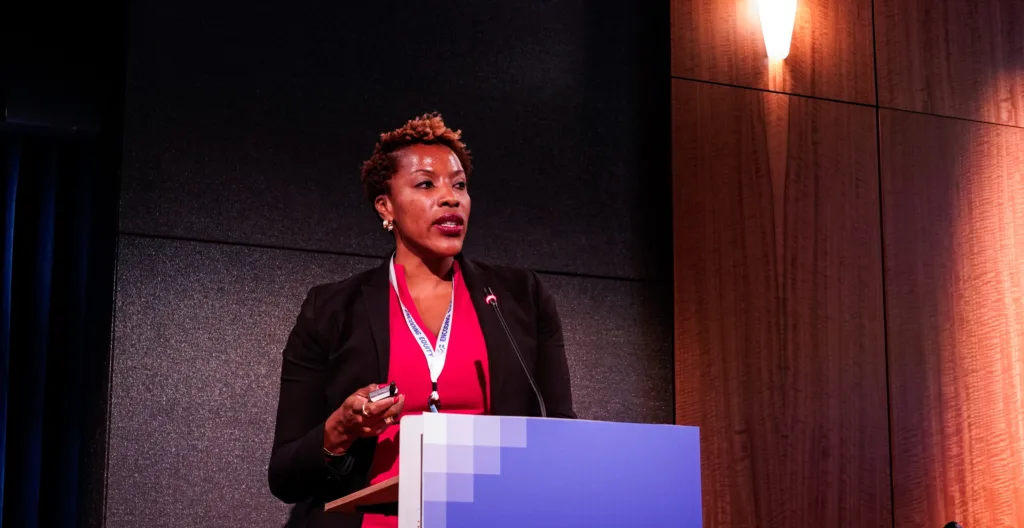
Using the principles of system transformation, Dr. Amaka Eneanya and her colleagues played key roles in a movement that ultimately reshaped clinical practice across the United States.
1. Establish a sense of urgency.
The first step was making an overlooked issue impossible to ignore. Although the issue had been previously raised in smaller academic outlets, Dr. Eneanya and colleagues, Dr. Wei Yang and Dr. Peter Reese, published a perspective in JAMA, which was shortly followed by the influential Hidden in Plain Sight article in the New England Journal of Medicine. Together, these major publications made the scientific community take notice.
2. Build a broad coalition.
Transforming medicine required allies at every level. Medical students and clinical trainees became powerful advocates, conducting and publishing research and opinion pieces, educating their peers, and pressing institutional leaders to reconsider the use of race-based equations in clinical care.
3. Communicate relentlessly.
In addition to scientific publications, Dr. Eneanya worked with journalists and major media outlets, like The New York Times, WIRED, NPR, and STAT, to explain why the issue mattered. Social media outlets like X and TikTok were also key to broad dissemination. A short social media video went viral, catching the attention of Grey’s Anatomy, which then incorporated the issue of race in kidney assessment into a compelling storyline.
4. Institutionalize the change.
The final step was embedding the new approach into national guidelines and policy. In 2021, the New England Journal of Medicine published the race-neutral eGFR equation. Subsequently, the United Network for Organ Sharing (UNOS) developed several federal policies, including banning the use of race-based eGFR calculations to determine transplant eligibility. UNOS also required a reevaluation of Black patients already on their waitlists using the new equation. As a result, over 23,000 patients had their wait times modified. Several countries, including Canada and the United Kingdom, also changed their guidelines to model the work done in the United States.
Lessons Learned
History repeats itself. So be prepared.
“No matter how noble the cause, you will have resistance,” Dr. Eneanya says. “This will happen again. So, we have to be mindful about how to navigate it.”
Don’t discount social scientists.
Medical researchers have a tendency to value quantitative research over qualitative research. For example, Dorothy E. Roberts, professor of law and sociology at the University of Pennsylvania, has written about abolishing race corrections for decades but was initially ignored until the field recognized the validity of her work as they recognized the contributions of a social science approach.
Engage patients in shared decision-making.
If race is being used to inform a treatment decision, explain why. Patients should always understand the rationale and have a voice in decisions that affect their care.
Follow your purpose and be courageous.
Dr. Eneanya combined her passion for health equity research with her expertise as a nephrologist to drive positive change, despite receiving significant pushback along the way. Her work hit close to home when her 73-year-old father received a kidney transplant after his eGFR was recalculated using the race-neutral equation.
Call to Action for Medical Societies
To get started in your own discipline, make sure to read the Clinical and Specialty Societies Implementation Toolkit.